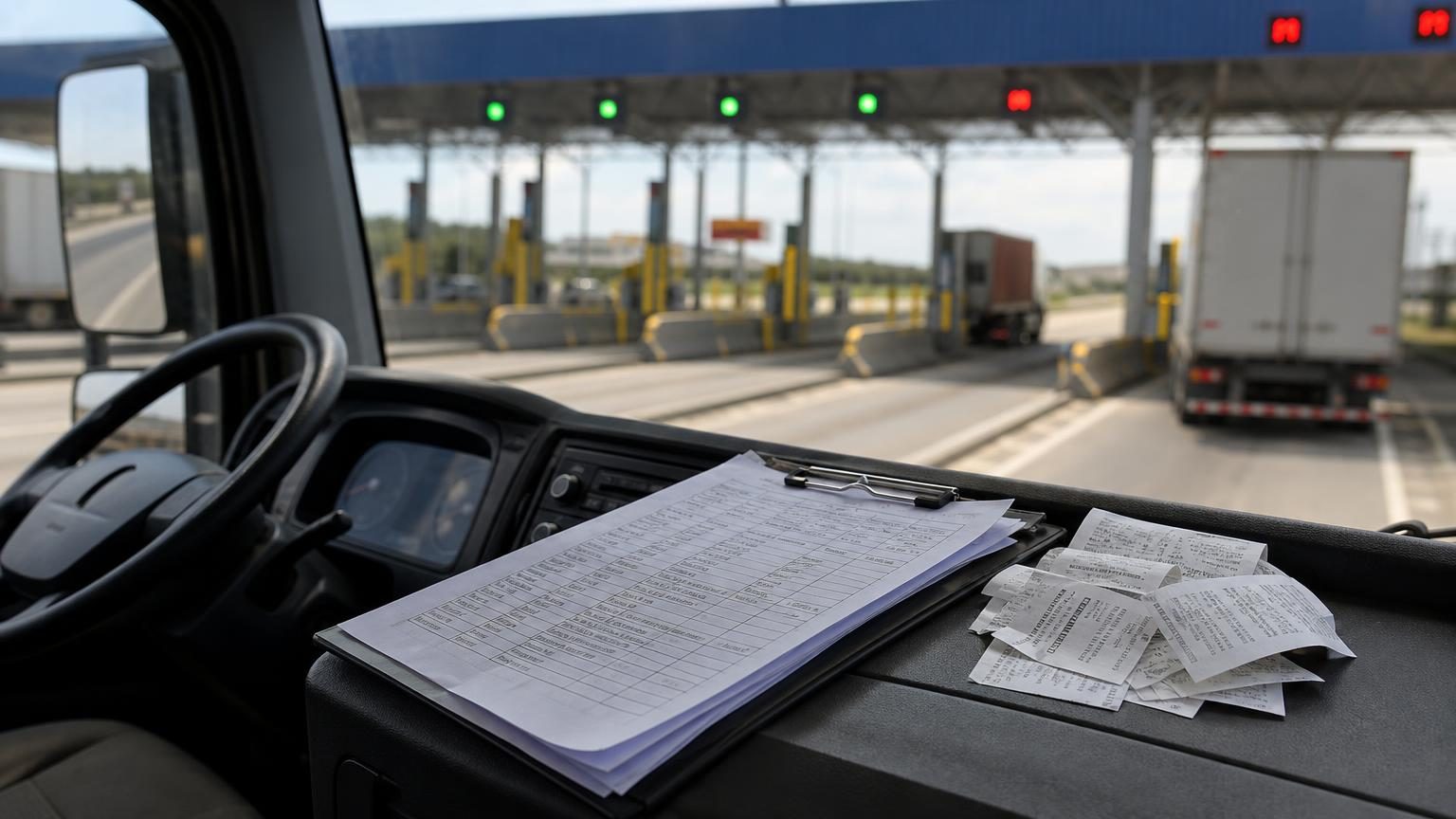
Context: the route needs to accompany the documentation
The Vale-Pedágio area of ANTT gathers explanations, authorized suppliers, legislation, and frequently asked questions. It is the consultation point to clarify the conditions applicable to the supply. This guide does not resolve contractual framing; it proposes a way to organize the information that the team needs to locate.
A recurring difficulty in trip management is keeping the planned route separate from financial records. When the route changes, the document sent to the driver may continue to describe the previous version. Therefore, the check should connect route, operation identification, and receipt, preventing each area from working with a different trip.
In practice: check before and after the route
Before departure, identify the agreed route and known toll points in the planning. Check with the person responsible for the contract which supply record will be used and how the driver will have access to the necessary information. Consult the official channel for supplier authorization when this is the operation's doubt.
Upon receiving a receipt, check its identification and the trip reference, without assuming that a payment message corresponds to the correct supply. Record discrepancies in a single list, with responsible person and forwarding. The competent team should clarify how to handle the case according to the applicable rules.
After the trip, compare planned route, recorded changes, and received entries. A difference may result from a route change, registration, or reconciliation. Investigate before attributing the cause to the driver or the system. This guide does not authorize discount, compensation, or unilateral alteration of what was contracted.
TRRC Analysis: an example of control
In a hypothetical situation, a roadblock leads the team to choose another path. The useful record contains reason, time, altered section, and communication to the responsible person. Without this memory, the financial department will only see a value difference at closing. With it, they can formulate a concrete question and seek the corresponding receipts.
Impact for each reader
The carrier can reduce message exchanges to locate a trip. The shipper can check what was agreed with the provider. The independent driver can keep the operation reference at hand and record a discrepancy without relying on memory after several days on the road.
To evaluate the fuel portion, consult the diesel guide. To organize other contract records, see CIOT. Fuel costs and toll controls must remain identifiable, even when analyzed in the same budget.
Source and limits
ANTT — Vale-Pedágio, consulted on 22/09/2026. The checklist is an administrative proposal from TRRC, not an official supply procedure nor a declaration of compliance.