What ANTT reported
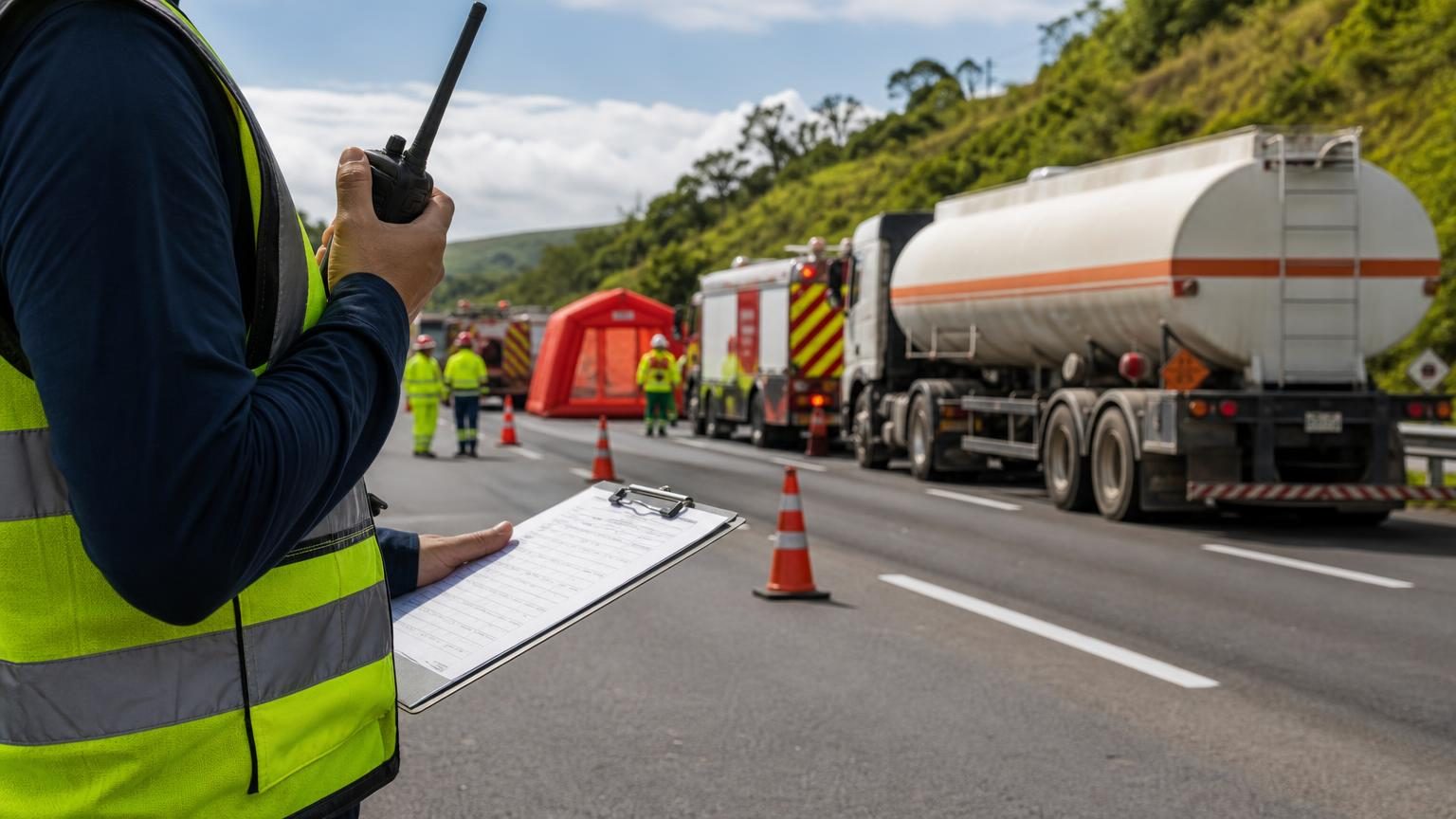
On 1th of October, EPR Via Mineira conducted a simulation at km 544 of BR-040, in Belo Horizonte. ANTT reported the participation of service, traffic, and environmental emergency teams. The scenario included vehicles and cargo of ethanol and hydrochloric acid, with mobilization of resources for different response fronts. It was an exercise, not news about a real accident.
Context: information must reach decision-makers
For a carrier, operational learning is not about reproducing containment procedures described in the report. It is about verifying if their team can forward correct information to those responsible for the service and communicate an interruption to the transport schedule. Service, traffic control, and road clearance are different stages: a first contact does not mean the journey can continue.
The shipper depends on this distinction to update the receipt forecast. A message like “team activated” describes the activation; it does not allow calculating a new delivery time. The TRRC's reading is that the record of each update should indicate its origin and what is confirmed, keeping pending what still depends on the service.
In practice: tabletop test, without simulating a real emergency
Choose a fictitious trip and internally check three points: who receives the first communication, who locates the operation data, and who informs the client about a change in forecast. Do not activate emergency services to test the registration.
Record which internal contacts were outdated and what information could not be located. Assign someone responsible for the correction and repeat only this verification. For the autonomous, the same check can be done with the hiring contacts and the official channels of the section before departure.
A registration model can separate update time, information origin, confirmed situation, and next scheduled communication. Avoid filling in a release forecast by assumption. Document organization can be related to the CT-e conference sheet, without exposing tax files in open messages.
What the exercise does not demonstrate
The source describes mobilization and training objectives but does not present a series of response times or performance comparison. It is not possible to conclude that the exercise guarantees effective service in any occurrence. This analysis does not guide intervention in hazardous cargo; response procedures depend on the competent teams and technical managers.
References
Consult the official ANTT publication.
Editorial update of 6th of October 2026: context and recommendations reviewed, with distinction between fact, hypothesis, and limits. The original publication date was preserved.