The numbers and their cut-offs
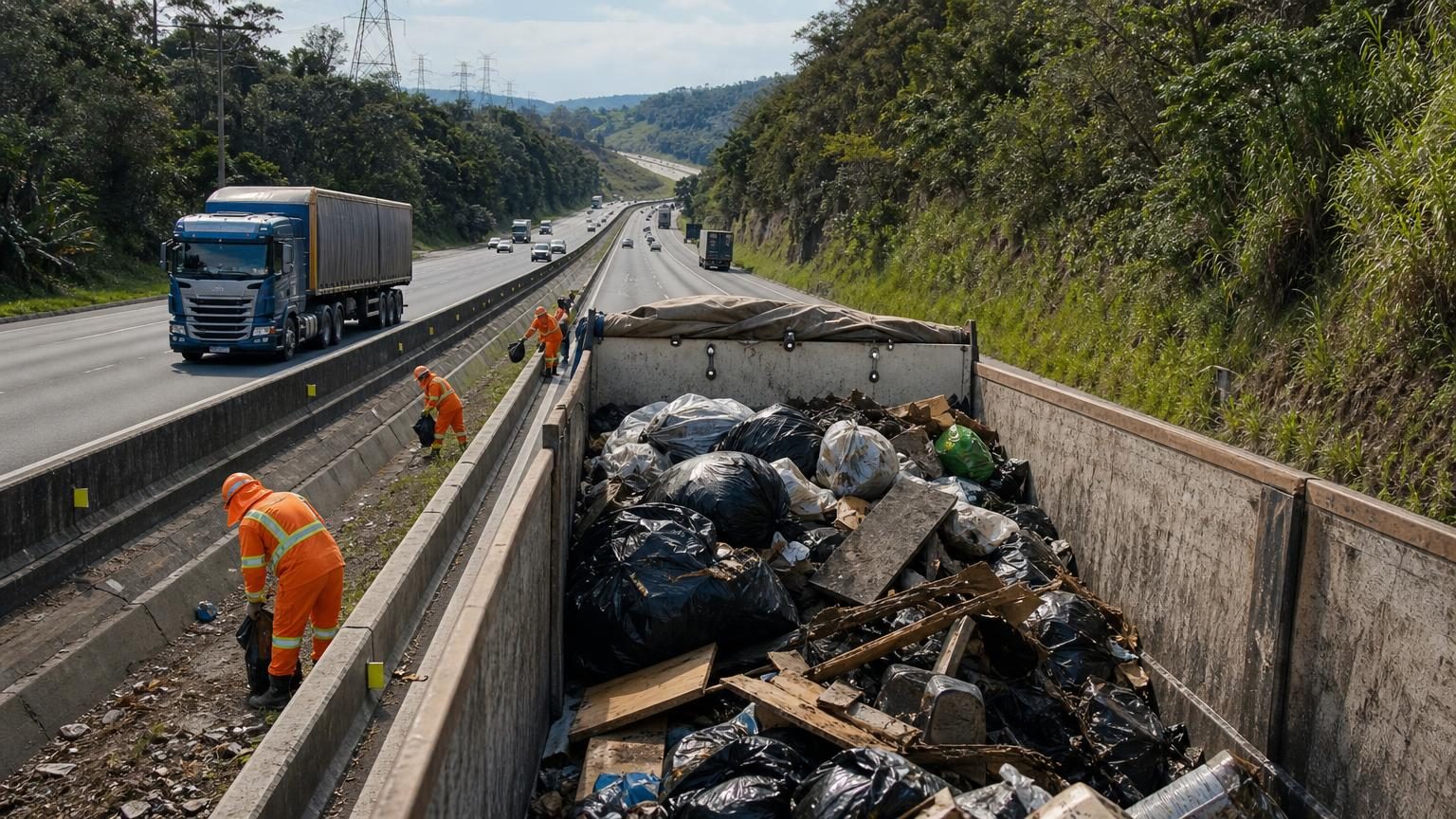
In the October publication of 2, ANTT reports that EPR Via Mineira collected approximately 661 tons of waste since August 2024 and about 74 tons in the first half of 2026. The news also mentions a planting that, in 2021, covered approximately 23 hectares. The planting data is historical: it should not be presented as a new delivery of 2026.
Context: accumulated is not performance comparison
Adding up materials collected over several years answers a different question than measuring the volume of a semester. To assert an increase or decrease, a comparable cut-off with the same coverage and method would be necessary. The news, in isolation, does not provide this series. It also does not allow transforming collected volume into an estimate of accidents avoided.
This distinction matters for carriers and shippers who use external data in sustainability reports. The concessionaire's activity does not automatically represent the disposal of the company's own waste. Recording a public number as a corridor reference is different from attributing to your operation an environmental result that it did not measure.
In practice: indicator reading sheet
Before inserting the data into a presentation, record four fields: what was measured, where, in which period, and by whom. In this case, “waste collected on the highway” should remain separate from “waste generated and disposed of by my operation.” Include the publication address to allow for later verification.
If a table mixes the accumulated since 2024 with the semester of 2026, correct the label before calculating variations. For the transport team, a report of material on the track should be forwarded to the competent service channel, with the location available in safe conditions; it does not constitute a collection task for the driver.
The TRRC Observatory applies the same discipline of reading unit and period to economic indicators. The application here is methodological: the observatory does not offer its own series of waste for this corridor.
Limits and next necessary evidence
The total collected may reflect disposal, scope, and intensity of cleaning actions. Without additional information, it is not possible to isolate these causes. For a future comparison, look for a new report with an equivalent period and method description. The published numbers are attributed to the official source; TRRC did not conduct independent weighing or environmental audit.
References
Consult the official ANTT publication.
Editorial update of 6 October 2026: context and recommendations reviewed, with distinction between fact, hypothesis, and limits. The original publication date was preserved.